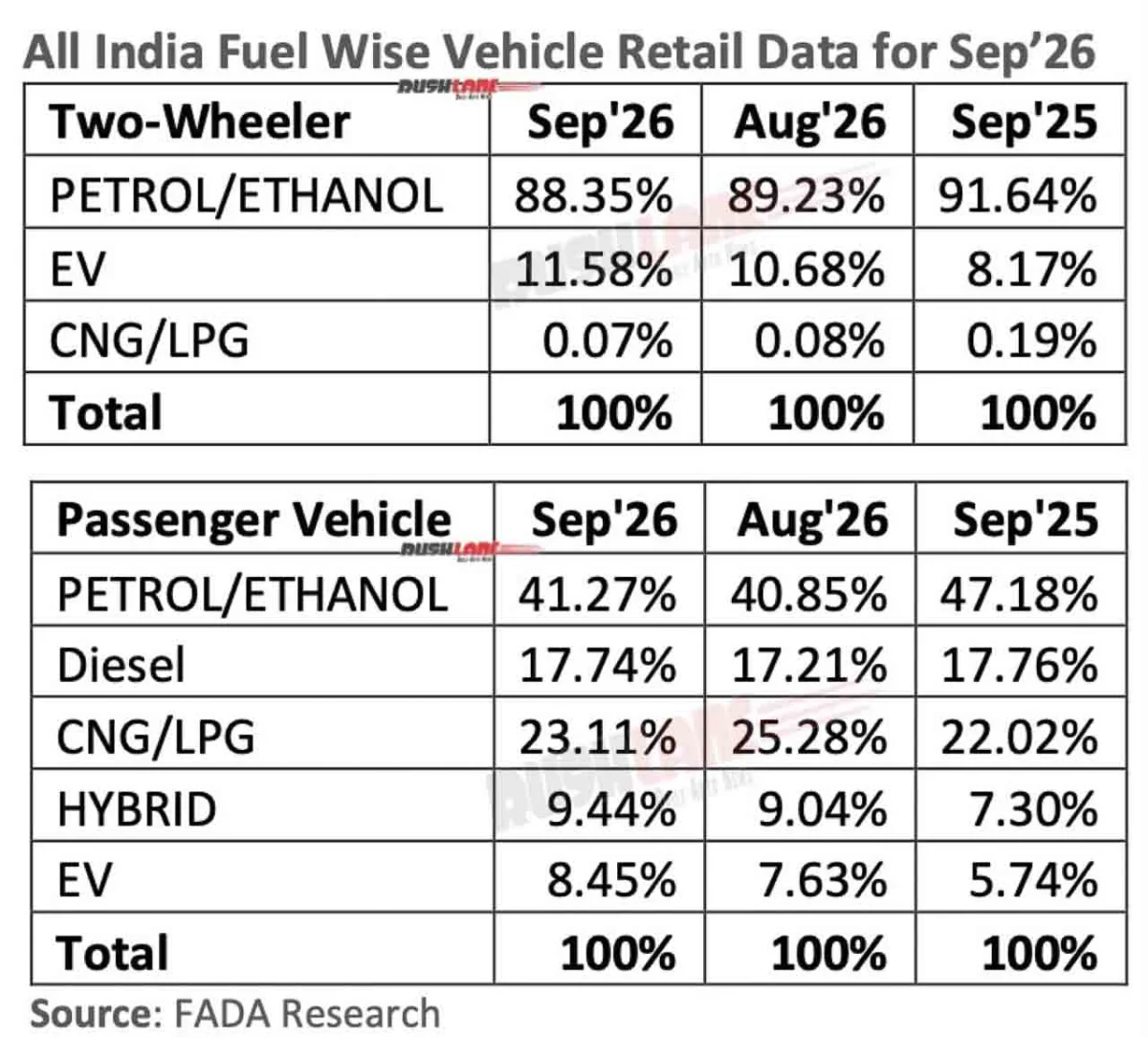
Electric vehicle registrations in India reached 36,108 units in September 2026, reflecting a substantial year-on-year growth of 94.56%.

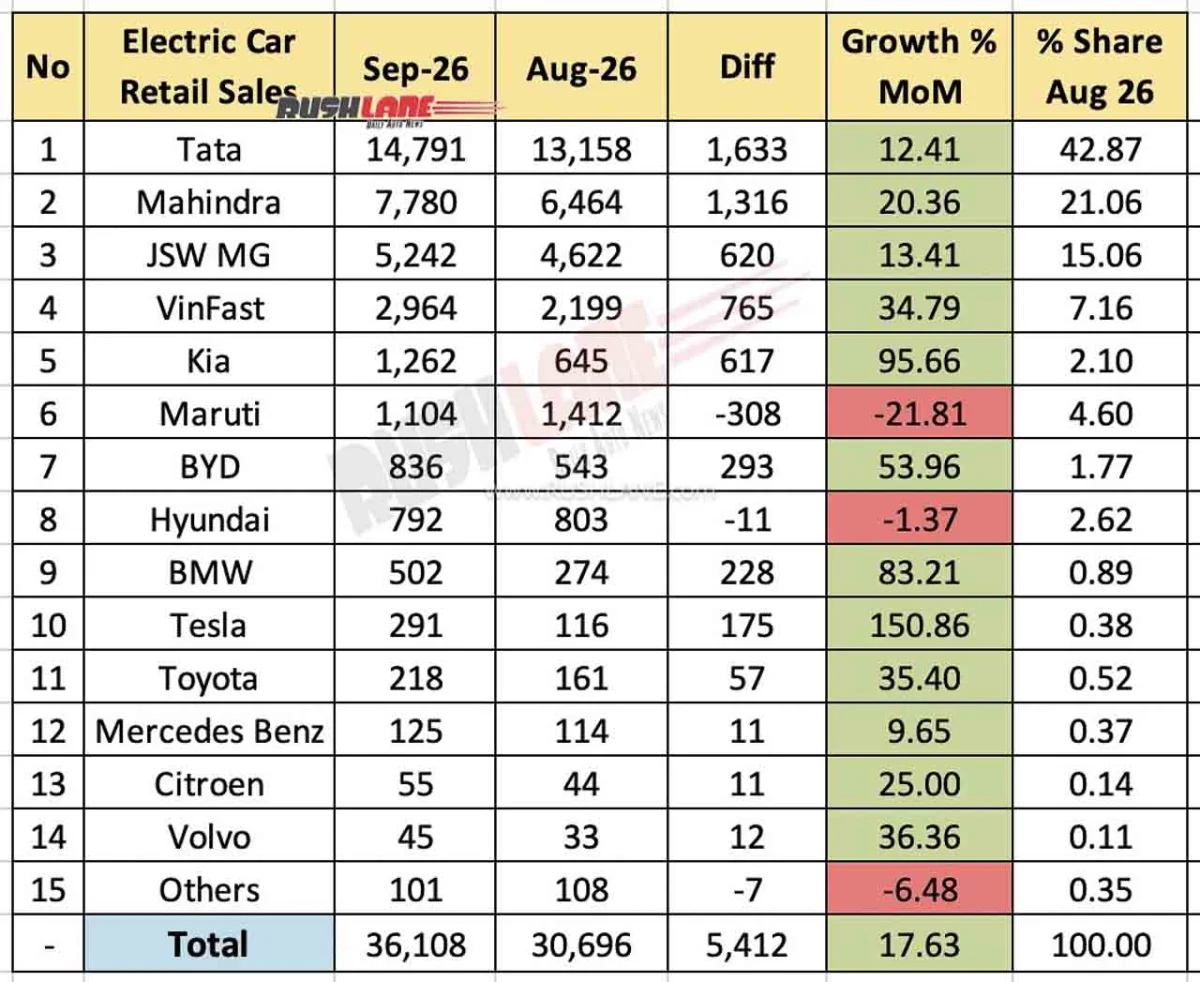
In September 2026, the Indian electric vehicle market witnessed a remarkable uptick, with total registrations climbing to 36,108 units. This marks a 17.63% month-on-month increase compared to August 2026, which saw 30,696 units sold. On a more significant scale, year-on-year sales nearly doubled, jumping 94.56% from the 18,559 units registered in September 2025. This robust growth indicates a strong shift towards electric mobility in India, supported by expanding model offerings and increasing consumer acceptance.

Tata Motors Maintains Dominance
Tata Motors continues to lead the electric passenger vehicle segment, securing the top position with a notable 14,791 units sold in September 2026. This achievement reflects a staggering 100.72% increase from the 7,369 units sold during the same month last year. Additionally, Tata's sales saw a month-on-month growth of 12.41%, rising from 13,158 units in August 2026. The automaker's extensive EV portfolio, which includes popular models like the Nexon EV and Tigor EV, has driven this success, enabling Tata to capture a significant market share.

Mahindra and MG Motor Show Strong Growth
Mahindra followed closely, selling 7,780 units, which translates to a 95.82% year-on-year increase from the 3,973 units registered in September 2025. Their month-on-month sales also grew by 20.36%, up from the 6,464 units in August. Meanwhile, MG Motor secured the third spot with 5,254 registrations, marking a 9.14% increase from the previous year and a 13.41% rise from the 4,622 units sold in the prior month. This steady growth among established players illustrates the increasing popularity of electric vehicles across varied consumer segments.
VinFast and Kia Surge Amidst Competition
VinFast experienced a remarkable surge in its sales, jumping to 2,964 units in September 2026, reflecting an extraordinary 49,300% increase year-on-year from merely 6 units in September 2025. Additionally, VinFast's sales improved by 34.79% from the 2,199 units registered in August 2026. This growth can be attributed to increasing consumer awareness and positive sentiment towards the brand's offerings in the EV space.
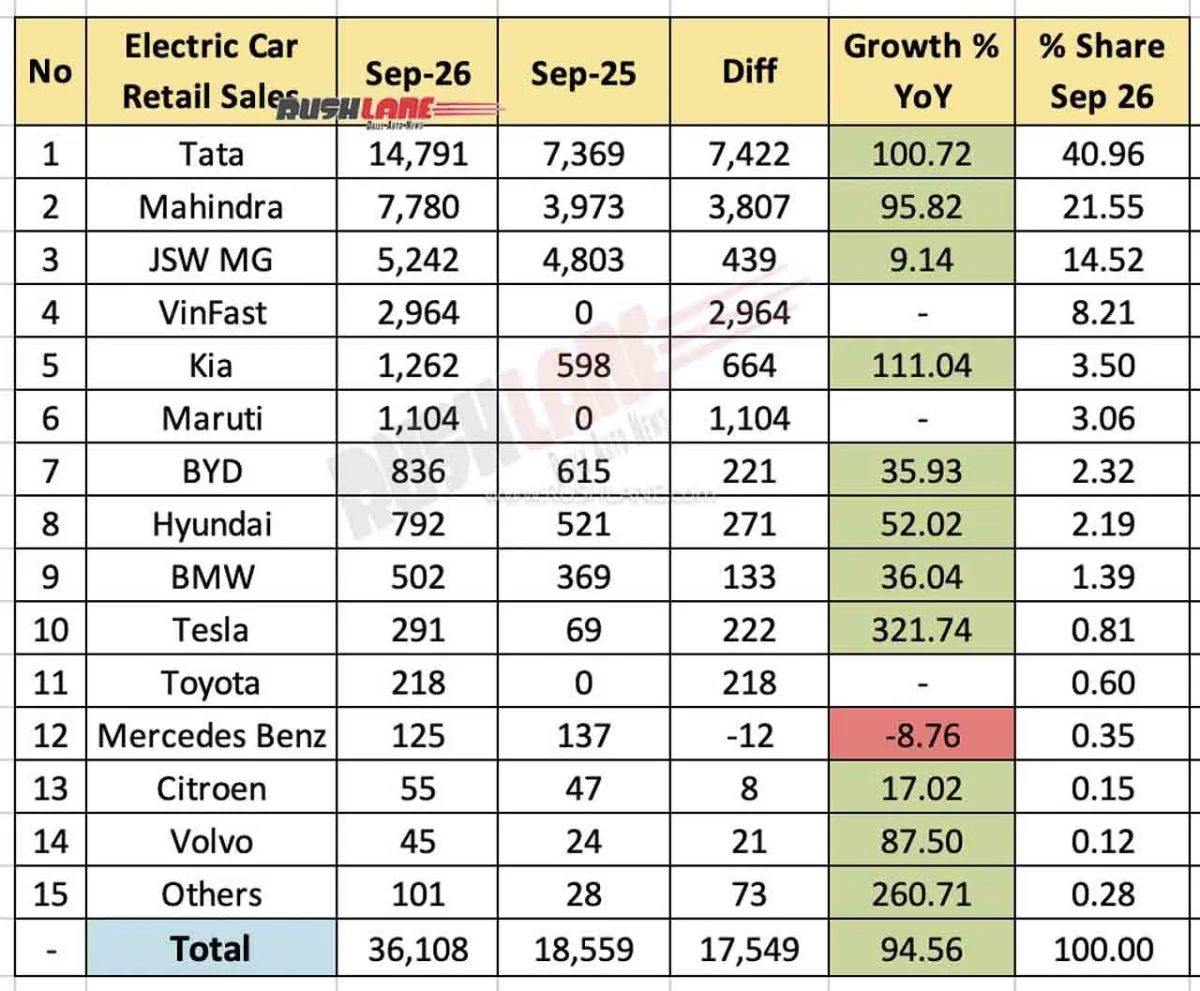
Kia also posted impressive numbers, registering 1,262 units sold, representing a 111.04% year-on-year gain from 598 units in September 2025 and a dramatic month-on-month increase of 95.66% from 645 units in August 2026. However, not all manufacturers saw growth; Maruti Suzuki, which is primarily known for its internal combustion engine vehicles, saw its EV sales decline to 1,104 units, down 21.81% month-on-month from 1,412 units in August 2026. As a relatively new player in the electric car market, Maruti faces challenges in establishing its brand and product offerings in this evolving landscape.
Other Players: BYD, Hyundai, and BMW
BYD recorded solid sales figures with 836 units sold, representing a year-on-year growth of 35.93% and a month-on-month surge of 53.96%. The brand is set to enhance its presence in the luxury EV segment, with plans to introduce its Denza brand to Indian consumers. Hyundai Motor India reported 792 electric vehicle sales, a 52.02% increase from 521 units sold in September 2025. While their month-on-month sales dipped slightly by 1.37%, the company is gearing up to launch a new sub-4 meter electric SUV that could attract more buyers.

In the luxury segment, BMW India achieved significant growth with 502 units sold, marking a 36.04% increase year-on-year and an impressive 83.21% rise month-on-month. Tesla India also saw robust advancements, with sales reaching 291 units, reflecting a striking 321.74% year-on-year increase from just 69 units in September 2025. Month-on-month sales surged by 150.86% from 116 units in August 2026.
Market Dynamics and Outlook
Mercedes-Benz experienced a slight decline in sales with 125 units sold, down 8.76% year-on-year, although it reported a 9.65% month-on-month improvement. Other noteworthy participants such as Toyota Kirloskar Motor and Citroen saw sales increases, with Toyota achieving 218 units sold, a 35.40% month-on-month growth from 161 units. Meanwhile, Citroen sold 55 units, and Volvo India recorded 45 units, both showing positive trends in their respective segments.
Collectively, other electric vehicle manufacturers contributed an additional 101 units to the market, despite representing a 6.48% month-on-month decline. However, year-on-year comparisons reveal an impressive 260.71% growth over the previous year, underscoring the widening acceptance of electric vehicles in the Indian automotive landscape.
As the market evolves, I expect the ongoing introduction of new models, coupled with improved charging infrastructure, to spark further growth in electric vehicle sales. Manufacturers are poised to capitalize on this momentum, making the next few years crucial for both established automakers and new entrants in the electric mobility space.


