Steve Morris shares valuable lessons from dyno-testing a high-performance 540-cubic-inch big-block Chevy, enhancing ignition and EFI tuning for optimal power.
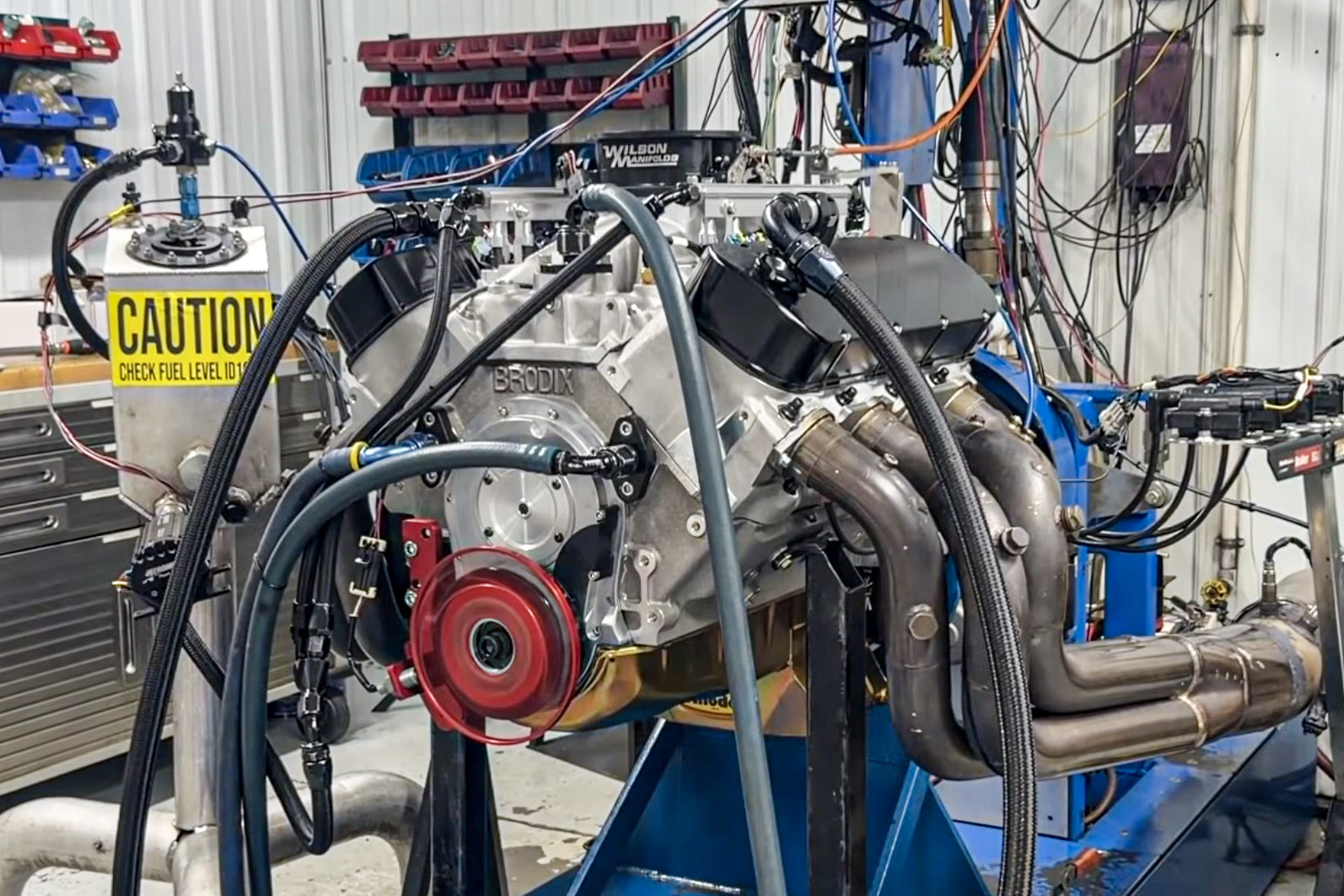
Steve Morris stands at the forefront of high-performance V-8 engine development, producing water-jacketed billet aluminum engines capable of exceeding 4000 horsepower. Known for powering some of the quickest vehicles in drag-and-drive competitions, his engines have helped achieve significant milestones, including the first five-second pass during Drag Week. His latest venture features a 540-cubic-inch big-block Chevy aimed at enhancing street performance, particularly in a classic 1968 Corvette. But even with extensive experience under his belt, Morris continually identifies areas for optimization.
Engine Features and Initial Results
In a recent video, Morris showcases the dyno-testing of this Chevy big-block, highlighting its impressive Dart Pro 2 380 heads. These advanced heads are designed with larger exhaust ports to support high-rpm power output, incorporating 2.35-inch intake valves and 1.88-inch exhaust valves. The CNC-machined ports, bowls, and combustion chambers mark a departure from standard offerings, demonstrating the potential for significant performance enhancements when combined with ample engine displacement. During the initial test, the engine showcased commendable performance, but it became clear that to achieve peak power at higher RPMs, further refinements were essential.
Optimizing Spark Delivery
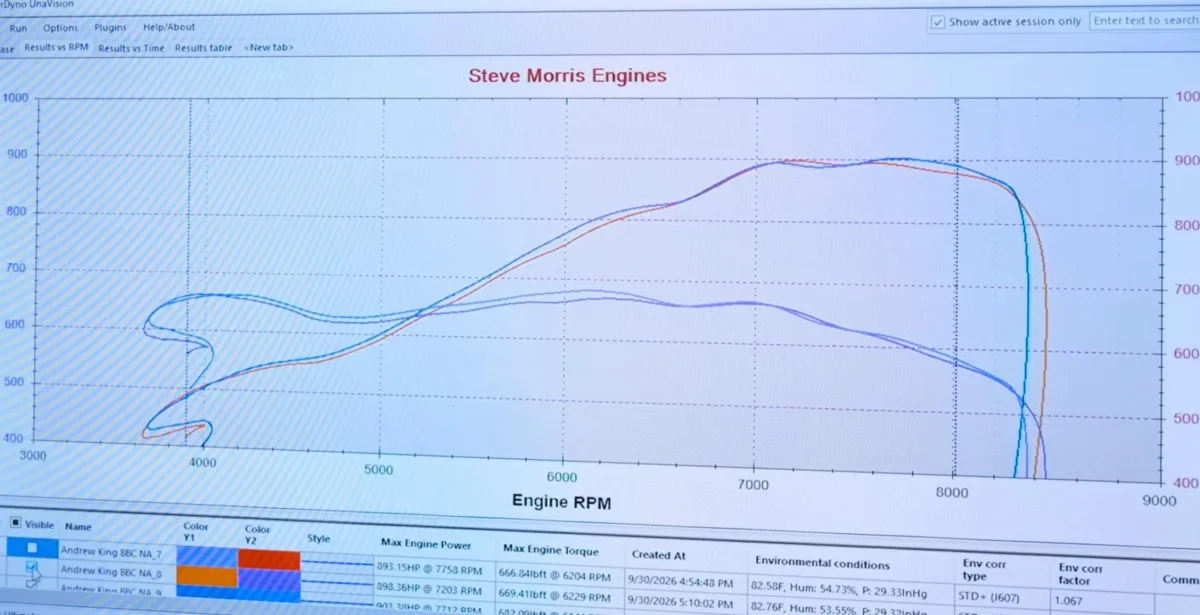
One vital takeaway from the testing process was the crucial role of spark delivery in high-rpm applications. Morris recognized that upgrading from a conventional dual-sync distributor to a crank-trigger ignition—with coils positioned near the spark plugs—improved both engine smoothness and power output. This adjustment allowed the engine to exceed 900 horsepower, breaking through a crucial performance threshold. Even for enthusiasts not looking to achieve such extreme numbers, these findings underline the importance of ignition accuracy in maximizing performance.
EFI Tuning Insights
Additionally, Morris offered valuable insights into adjusting the fuel injection system via Holley EFI software. He emphasized the significance of injector end angle—specifically, the timing of fuel injection relative to the crankshaft’s position. Properly timing the fuel pulse to coincide with the optimal part of the intake cycle can yield enhancements in engine performance that many tuners may underestimate. Morris’s approach advocates precise tuning and thoughtful adjustments that complement system upgrades.
Camshaft Considerations
Although specific camshaft specifications were not disclosed, Morris confirmed that a custom-ground solid roller cam played a pivotal role in achieving the engine’s power characteristics. The dyno results revealed a remarkably flat torque curve along with a consistent power plateau lasting for approximately 1000 RPM. This performance profile serves traditional street driving needs well, though purists in the drag racing community might crave more aggressive cam timing for higher peak power. Regardless, the setup reflects a well-thought-out combination of components designed to work in harmony.
Achievement Metrics
Morris's engine yields an impressive figure of 1.67 horsepower per cubic inch—a substantial achievement, particularly when coupled with a moderate compression ratio of 10.4:1. Notably, the engine incorporates a substantial throttle body and a tall Edelbrock Super Victor intake, further emphasizing its performance-oriented design. Yet, the enduring lesson from this build is the importance of synergy among engine components. Every part's selection and tuning need to consider each component's interaction with the others, ensuring that the system as a whole operates efficiently.
Takeaway and Future Considerations
The practical insights shared by Morris not only enhance understanding for enthusiasts but also serve as guidance for builders and tuners looking to maximize the potential of their own setups. Whether modifying classic muscle cars or refining dragster engines, fostering a mindset of continuous learning is paramount. As vehicle technology evolves, so too should the strategies for building high-performance powerplants. Future projects will likely build on these lessons, pushing the limits of both engine technology and practical application.
The journey doesn't end with mere testing; it takes a thoughtful approach to exploration and experimentation to unravel the full extent of an engine's capabilities. As the landscape of performance engines continues to shift, builders like Morris play a crucial role in shaping its direction through shared knowledge and practical experience.


